
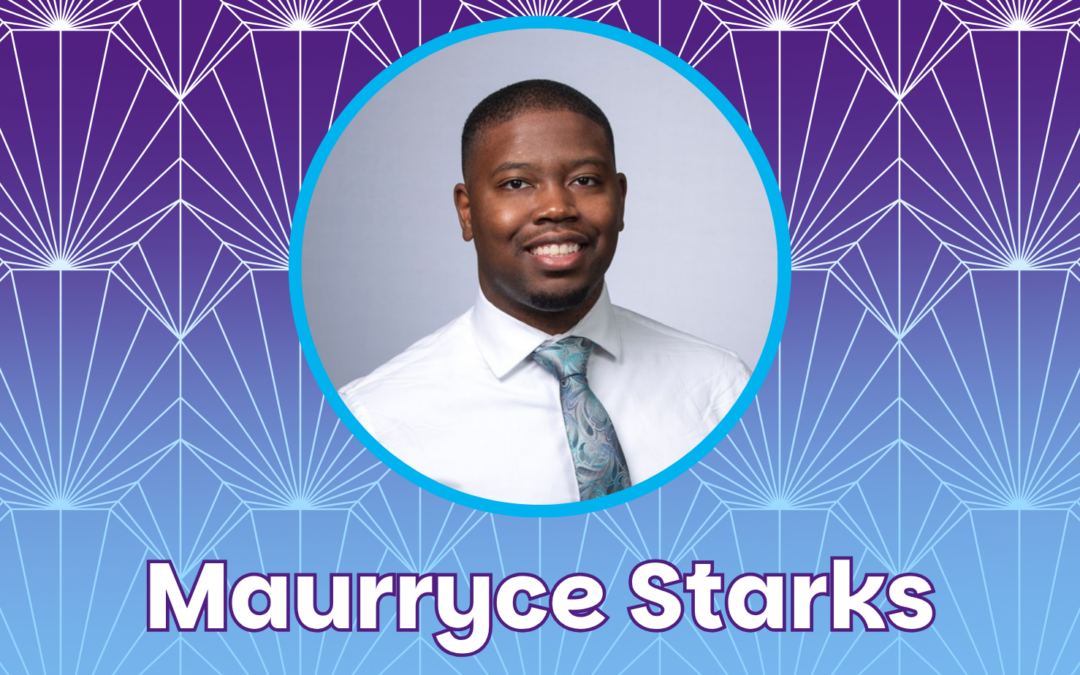
Maurryce “Mo” Starks grew up in a family that believed deeply in the power of education. When he was born, neither of his parents had a high school diploma. His mother would later earn her high school diploma and go on to become a nurse. Though from an early age both of his parents echoed one message: “You are going to college.” While the expectation was never in question; navigating the path to college was.
Navigating the Path to College
While attending Euclid High School, Mo thrived both academically and socially. He took honors classes, played in the band, wrestled and built strong friendships. Yet when it was time to go off to college, that all changed overnight.
Proximity to Knowledge
Mo lacked what he describes as “proximity” to knowledge, to people who had done it before, and to the cultural information that makes something feel possible. While Mo’s village knew higher education mattered, they did not know the unwritten rules that helped students successfully attend and graduate college.
As Mo prepared to graduate from high school in 2014, a counselor who knew his story and believed in him encouraged him to work with a College Now advisor for help applying to scholarships. Mo ultimately received a scholarship from College Now to attend The College of Wooster, which he notes allowed him to afford college.
The Difference Mentorship Makes
Through College Now, Mo was also paired with mentor Russ Miller. Russ offered something Mo’s family simply could not: firsthand experience. Over conversations at baseball games and meetings throughout the school year, Russ shared the unwritten rules of college life, from managing academics to finding balance and building relationships. He gave Mo access to the kind of knowledge that often goes unnoticed until someone in proximity hands it to you. It planted the idea in Mo that success was not just reserved for other people.
Transforming What Felt Impossible into Something Tangible
After graduating from The College of Wooster in 2018 with a Bachelor of Arts degree in cognitive behavioral neuroscience, Mo began working in a neuroscience lab at The Ohio State University. Working in a neuroscience lab gave Mo valuable research experience, introduced him to the realities of graduate school, and showed him that he belonged in spaces he had once assumed were not meant for people like him. It transformed what felt impossible into something tangible.
Making Knowledge a Gateway
Today, Mo is preparing to defend his dissertation in neuroscience and psychology at the University of North Carolina, leading to a doctorate degree. He is passionate about making science accessible. The soon-to-be Dr. Starks expresses that “knowledge should not be a gatekeeper; it should be a gateway,” and the impact of that philosophy extends well beyond his own career. His sister returned to school to earn a credential in dental hygiene. Younger cousins now see college as normal, and his nieces are growing up knowing that someone in their family is a neuroscientist and that pursuing ambitious goals are attainable.
The Investment Continues to Ripple Outward
It has been nearly a decade since Mo received his last College Now scholarship payment during his undergraduate years, but the investment continues to ripple outward. In every student he mentors, every scientific concept he makes more accessible, and every family member who sees new possibilities because of his example, the impact lives on.
Mo’s story is a testament that sometimes the difference between “impossible” and “I’m on my way” is support and proximity.