
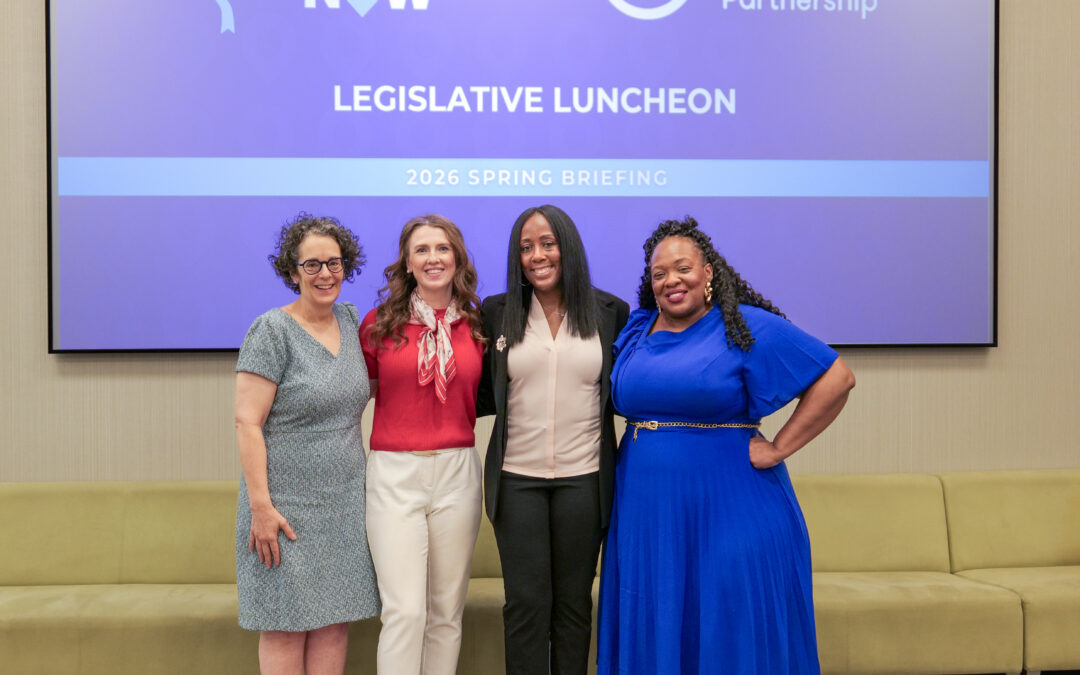

On April 24, College Now and the Greater Cleveland Partnership welcomed state legislators to learn more about the state of higher education from those who deeply understand why raising college access and completion rates is crucial to the vitality of Northeast Ohio.
Partnerships with legislators and the business community are central to College Now and the ability to fulfil our mission of increasing higher education access and completion for the 42,000 individuals we serve each year.
We’re grateful to the state leaders who engaged deeply in the conversation and asked thoughtful questions about education access, affordability and workforce alignment:
- Representative Juanita O. Brent – Ohio House District 18
- Representative Darnell Brewer– Ohio House District 22
- Representative Eric Synenberg – Ohio House District 21
- Representative Bride Rose Sweeney – Ohio House District 16
- Senator Kent Smith – Ohio Senate District 21
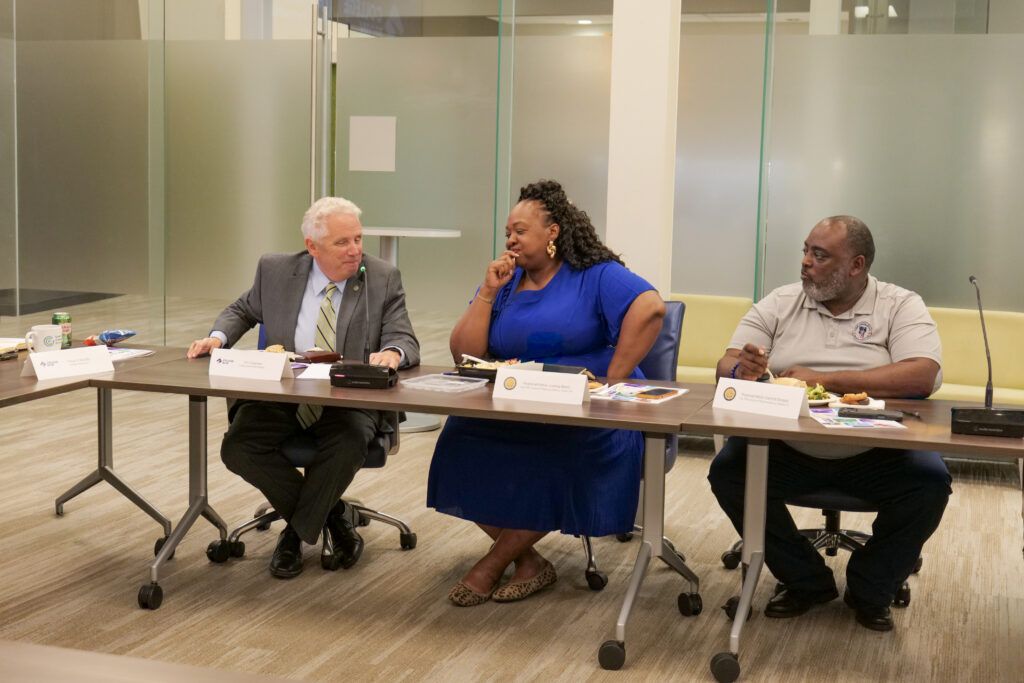
Hosted in collaboration with the Greater Cleveland Partnership (GCP), the legislative briefing brought together people who don’t always have the opportunity to sit together – policymakers shaping budgets, those thinking about talent needs and former students with the lived experience behind the data.
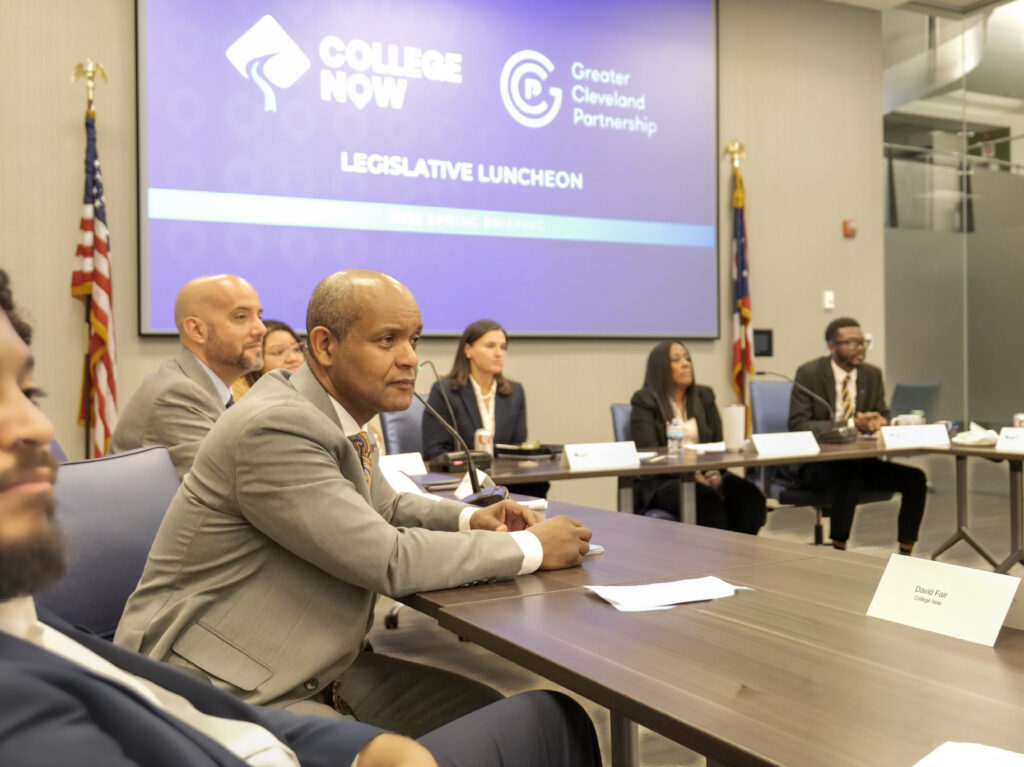
One theme that College Now understands well surfaced repeatedly:
Education and a skilled workforce directly impact both economic vitality and civic engagement for individuals, families and entire communities. That message was reinforced by GCP’s Dr. Michael Schoop, who shared insights from the business community’s perspective. Representing more than 12,000 businesses across Northeast Ohio, GCP knows firsthand how talent gaps can negatively impact regional growth.
He shared that while businesses in the region are growing at roughly 3.3% each year, the population of Greater Cleveland has remained largely flat. That mismatch leaves thousands of jobs unfilled each year, slowing economic momentum. But for every 100 jobs filled in Northeast Ohio, nearly $250 million is added to the regional economy.
Keeping Talent in Northeast Ohio
GCP also highlighted encouraging progress around keeping college graduates in the region. Northeast Ohio colleges and universities attract nearly 190,000 students each year. Five years ago, only about 47% of those students stayed in the region after graduation. Today, that number has climbed to 51%, with a shared goal of reaching 55%.
Each percentage point represents hundreds of additional graduates choosing to live, work and build careers right here.
College Now plays a key role in that effort by helping students connect education decisions to career pathways early on. GCP complements that work by connecting students to employers, including small and mid-sized businesses students may not yet be familiar with. A growing talent platform developed in collaboration with College Now already connects more than 1,000 students with over 100 employers, and that network continues to expand.
As powerful as the data is, the most meaningful moments of the briefing came from College Now alumni Alexis Crosby and Trevon Edwards.
Alexis shared her experience of being a first-generation college student. As the valedictorian of her class at Glenville High School, Alexis was clearly strong academically but initially did not have access to information about standardized testing, financial aid or college navigation. College Now helped bridge those gaps and connected her to opportunities that influenced her decision to attend Cleveland’s Case Western Reserve University, leading to a career serving Ohio with the Fair Elections Center.
Trevon recalled his experience at Martin Luther King Jr. High School, where College Now advisors helped him complete college applications, navigate financial aid and reimagine his future. A graduate of Central State University, Trevon is a community leader and serves as center director of Rose Centers for Aging Well’s Old Brooklyn location. Trevon is also a College Now volunteer mentor and an incoming Cleveland State University master’s student.
Their participation underscored the importance of continued collaboration as Ohio looks ahead to future policy and budget decisions.
What was clear is that when education, business and policy work together, students thrive, and so does our region.